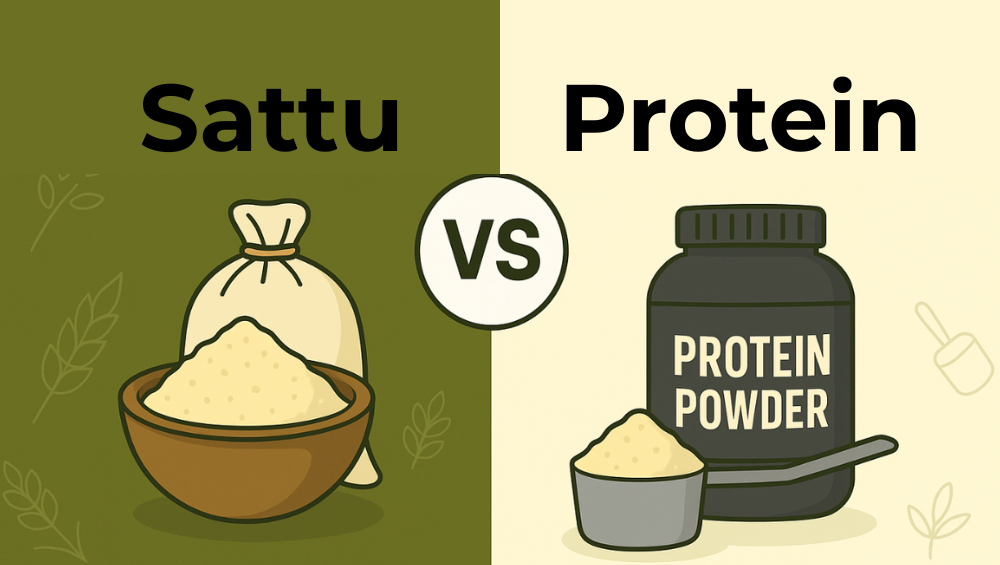
When it comes to fitness and nutrition, protein intake plays a crucial role in muscle building, recovery, and overall health. Among the many protein sources available, two options stand out: Sattu and commercial protein powders. But which one is better? Let’s break it down.
What is Sattu?
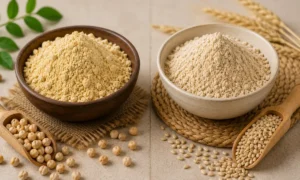
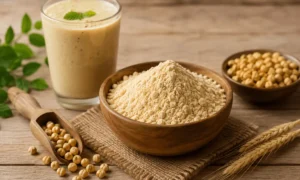
Sattu is a traditional Indian superfood made from roasted Bengal gram (chana dal) and ground into a fine powder. It has been a staple in Indian households for centuries, providing an affordable and natural source of nutrition.
What Are Protein Powders?
Protein powders, often made from whey, soy, or plant-based proteins, are commercially manufactured supplements that cater to athletes and fitness enthusiasts.
Nutritional Comparison
| Nutrient | Sattu (per 100g) | Whey Protein Powder (per 100g) |
|---|---|---|
| Protein | 20-22g | 70-80g |
| Fiber | 18-20g | 1-2g |
| Carbs | 55-60g | 5-10g |
| Fat | 6-7g | 3-5g |
Health Benefits
Sattu:
- Rich in fiber, helping in digestion and gut health.
- Natural and chemical-free compared to processed protein powders.
- Balances blood sugar and provides sustained energy.
Protein Powders:
- Higher protein content, essential for muscle growth.
- Convenient and easy to consume, especially for athletes.
- Contains BCAAs, which help in muscle recovery.
Which One Wins?
If you’re looking for an all-natural, holistic, and fiber-rich source of protein, Sattu is your best bet. If your goal is muscle-building and high protein intake, then whey protein may be more effective.